Infomaniak Kubernetes Review: Swiss Cloud Promise vs Reality
Hands-on review of Infomaniak Kubernetes. Free control plane, Swiss hosting, but 500 IOPS storage and missing features. Full breakdown inside.
Infomaniak is a Swiss hosting provider that’s been around since 1994. They’re known for their commitment to privacy, GDPR compliance, and renewable energy. When I saw they offered managed Kubernetes with a free control plane tier, I had to test it for EU Cloud Cost.
What I Tested
For this review, I deployed a Kubernetes cluster using:
- Control Plane: Shared tier (free)
- Nodes: 3x A4-RAM8-DISK80-PERF1 (4 vCPU, 8 GB RAM, 80 GB disk)
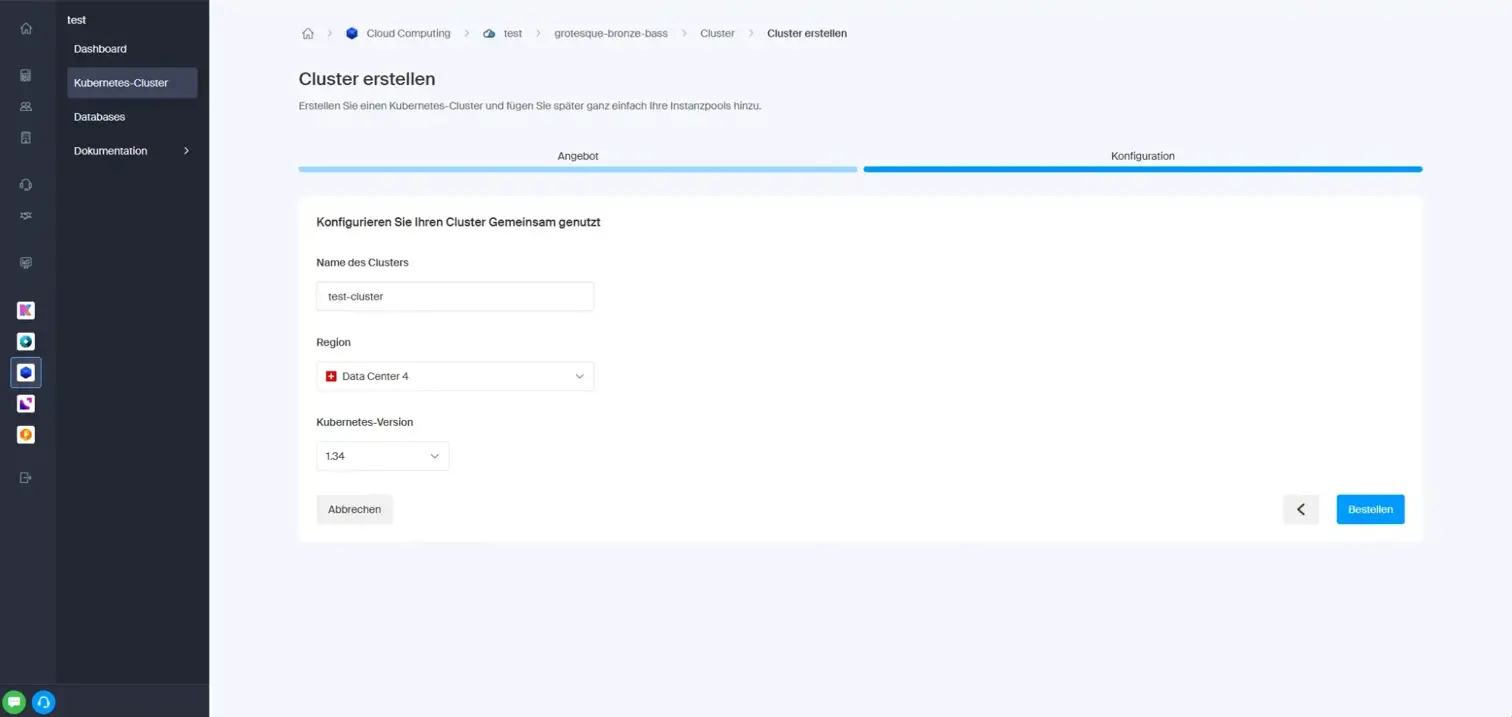
- Region: Data Center 4 (Switzerland)
- Kubernetes Version: 1.34
- Automation: OpenTofu with the official Infomaniak provider
Total estimated cost: €49.42/month (€13.14/node + €10 for LoadBalancer)
I also created an OpenTofu repository to automate the deployment. Big thanks to yewolf.fr for the initial inspiration.
The Good
Swiss Data Sovereignty
If you need your data to stay in Switzerland, Infomaniak is one of the few options. They’re 100% Swiss-owned, use renewable energy, and have a strong privacy track record. For compliance-heavy workloads where Swiss jurisdiction matters, that’s valuable.
Free Control Plane (Shared Tier)
The shared control plane costs nothing. You only pay for worker nodes and infrastructure. That’s a nice touch for hobby projects or development environments.
Terraform Provider Exists
There’s an official Terraform provider that actually works. Here’s a minimal setup:
resource "infomaniak_kaas" "cluster" {
  public_cloud_id         = var.public_cloud_id
  public_cloud_project_id = var.public_cloud_project_id
  name                    = "my-cluster"
  pack_name               = "shared"
  kubernetes_version      = "1.34"
}

resource "infomaniak_kaas_instance_pool" "nodes" {
  kaas_id     = infomaniak_kaas.cluster.id
  name        = "node-pool"
  flavor_name = "a4-ram8-disk80-perf1"
  min_instances = 3
  max_instances = 3
}
The provider handles cluster creation and kubeconfig extraction cleanly. You can grab your kubeconfig with:
tofu output -raw kubeconfig > ~/.kube/infomaniak.yaml
export KUBECONFIG=~/.kube/infomaniak.yaml
and your ready to go.
Cilium CNI
They use Cilium as the CNI, which is a solid choice, modern and performant.
The Bad
Nodes Wouldn’t Come Up
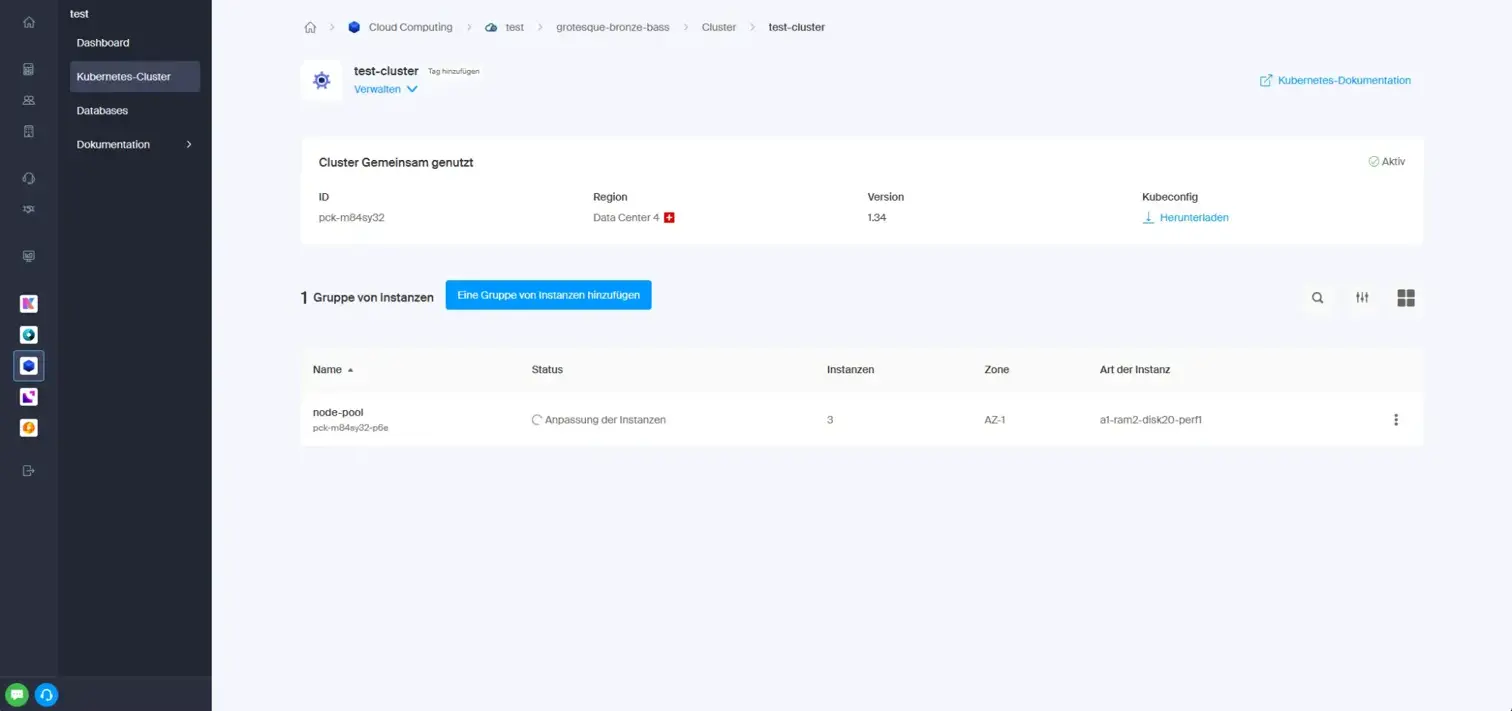
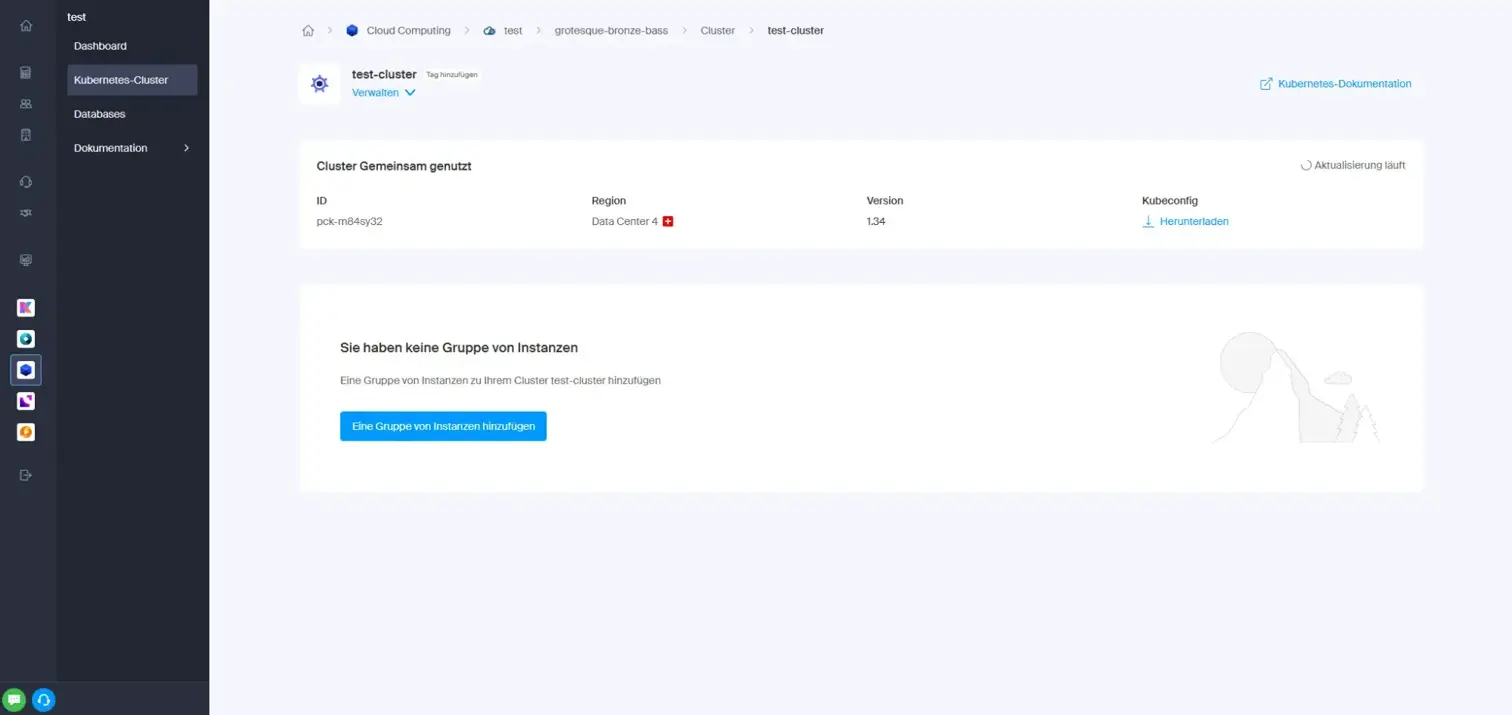
Here’s where things got interesting. I created the cluster, the control plane came up fine, and then… nothing. The node pool showed “Anpassung der Instanzen” (adjusting instances) for over 20 minutes.
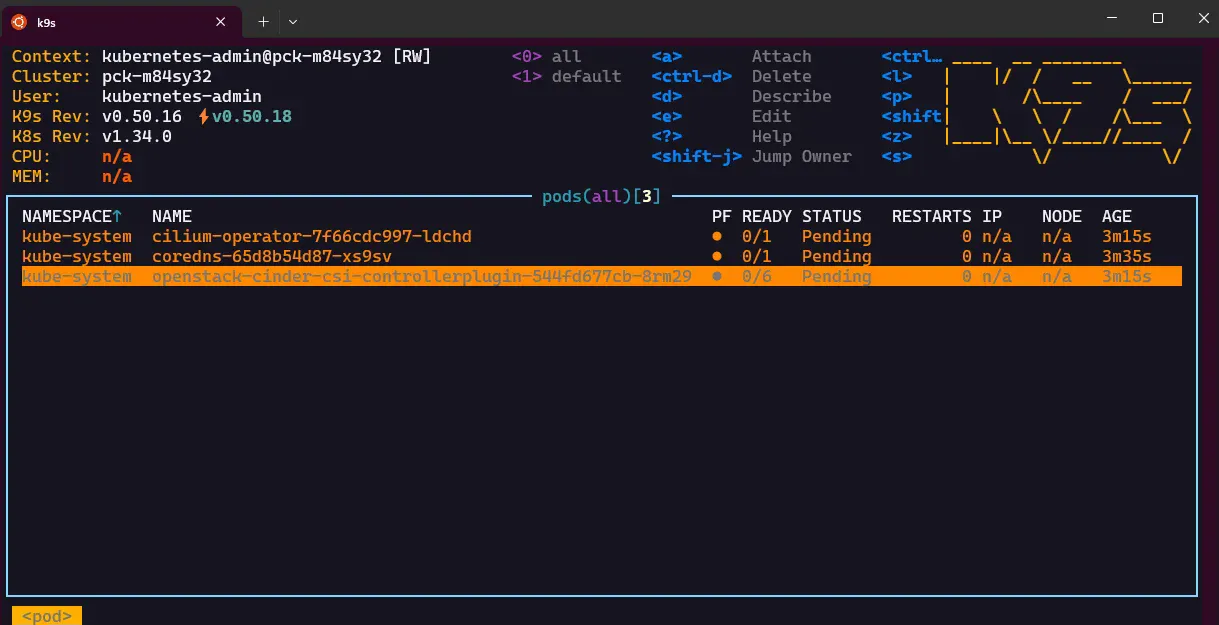
In k9s, I could see the control plane was responding, but all system pods were stuck on Pending with no nodes available:
I tried:
- Different instance sizes (a1-ram2-disk20-perf1 up to a4-ram8-disk80-perf1)
- Different availability zones
- Creating fresh clusters
Same result every time. I opened a support ticket.
500-1000 IOPS Storage
This is the dealbreaker for any serious workload. Infomaniak’s storage tiers are:
| Tier | IOPS |
|---|---|
| perf1 | 500 |
| perf2 | 1,000 |
I ran fio on a perf1 volume to verify, and the specs are accurate:
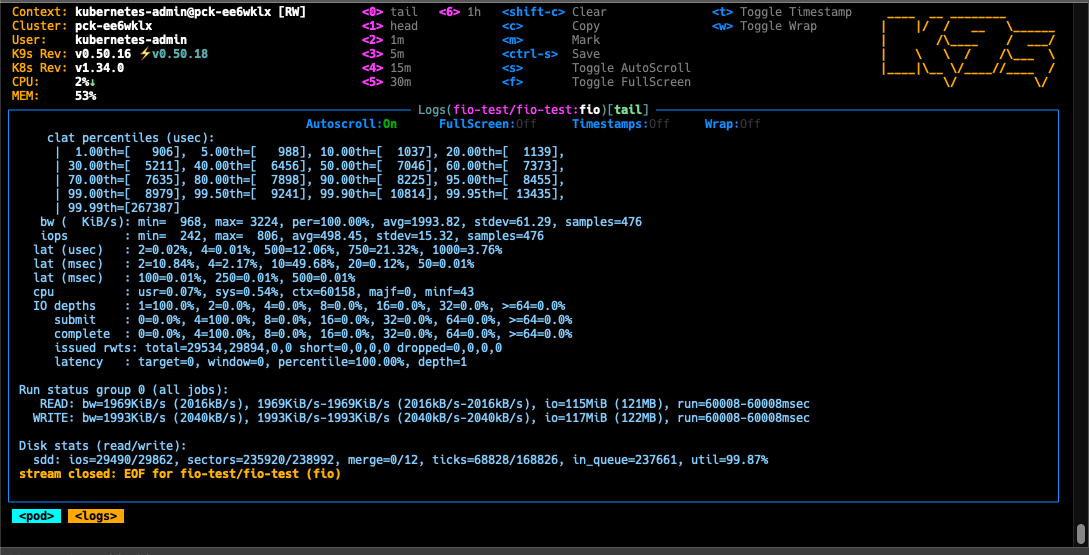
iops    : min=242, max=806, avg=498.45
READ:   bw=1969KiB/s (~2 MB/s)
WRITE:  bw=1993KiB/s (~2 MB/s)
For comparison, IONOS offers 24,000-45,000 IOPS on their standard and premium tiers. That’s 48-90x more than what I measured on Infomaniak.
Running a database on 500 IOPS? Good luck. Even a busy WordPress site would struggle.
No Network Security Options
This is critical for anyone with compliance requirements. To be fair, worker nodes do get internal IPs (172.21.x.x range), which is good. But I couldn’t find:
- API endpoint whitelisting - Anyone can hit your API server
- VPC/VLAN isolation - No network segmentation options
- VPN/private connectivity - No hybrid cloud options
- Bastion host support - No clear path for secure access
As someone with regulatory requirements in mind, this is concerning. You’d need to bolt on OPNsense or pfSense VMs, configure BGP, build IPsec tunnels yourself… and that “simple” workaround runs on 500 IOPS storage.
OpenStack Under the Hood
As far is I understand it, Infomaniak’s Kubernetes is essentially OpenStack with a K8s addon. The Terraform provider is pretty minimal - it handles cluster and node pool creation, but that’s about it.
Want private networking, security groups, or custom network topologies? You’d probably need to drop down to the OpenStack provider and configure Neutron, Octavia, and friends yourself.
And sure, maybe that’s powerful for OpenStack experts. But when I choose a “managed Kubernetes” offering, I’m looking for something closer to the EKS/AKS/GKE experience: define your cluster, set some security options, click deploy, done. I don’t want to become an OpenStack networking specialist just to get a private cluster with API whitelisting.
That’s the gap here. It’s not that OpenStack is bad - it’s that “managed Kubernetes” implies someone else manages the complexity.
Limited Managed Services
The only managed database available is MySQL. No PostgreSQL, no Redis, no managed message queues. If you need more, you’re building it yourself.
Features Still Maturing
Update (Feb 2026): Good news - autoscaling is now available! You can set min/max instance counts (1-8 range in my test). I haven’t tested it under load yet, so I can’t speak to how well it performs, but it’s there.
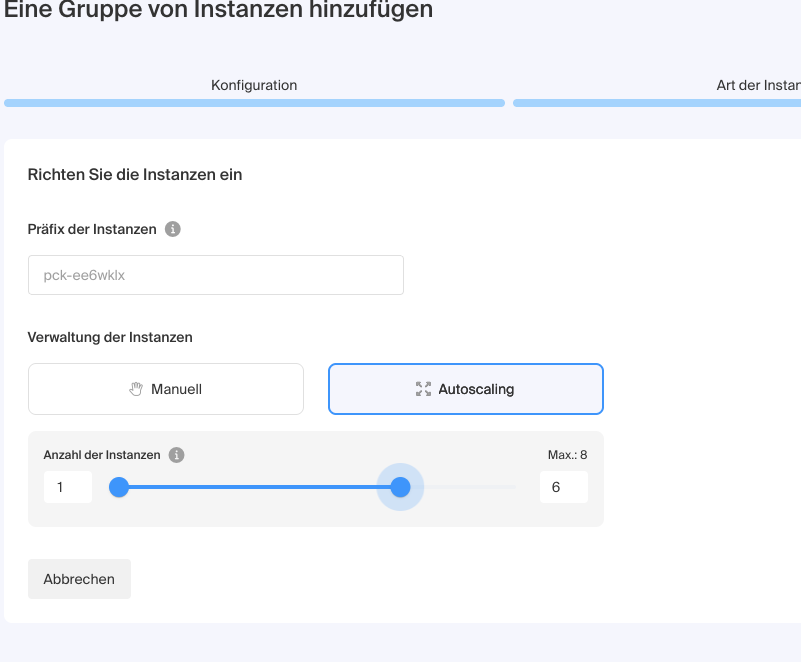
Rolling updates are still marked as “Demnächst verfügbar” (coming soon).
Only Kubernetes 1.34
No version selection. You get 1.34, that’s it. At least it’s relatively recent, but the lack of choice is limiting for teams that need version compatibility.
The Setup Process
Despite the issues, here’s what the deployment workflow looks like when it works:
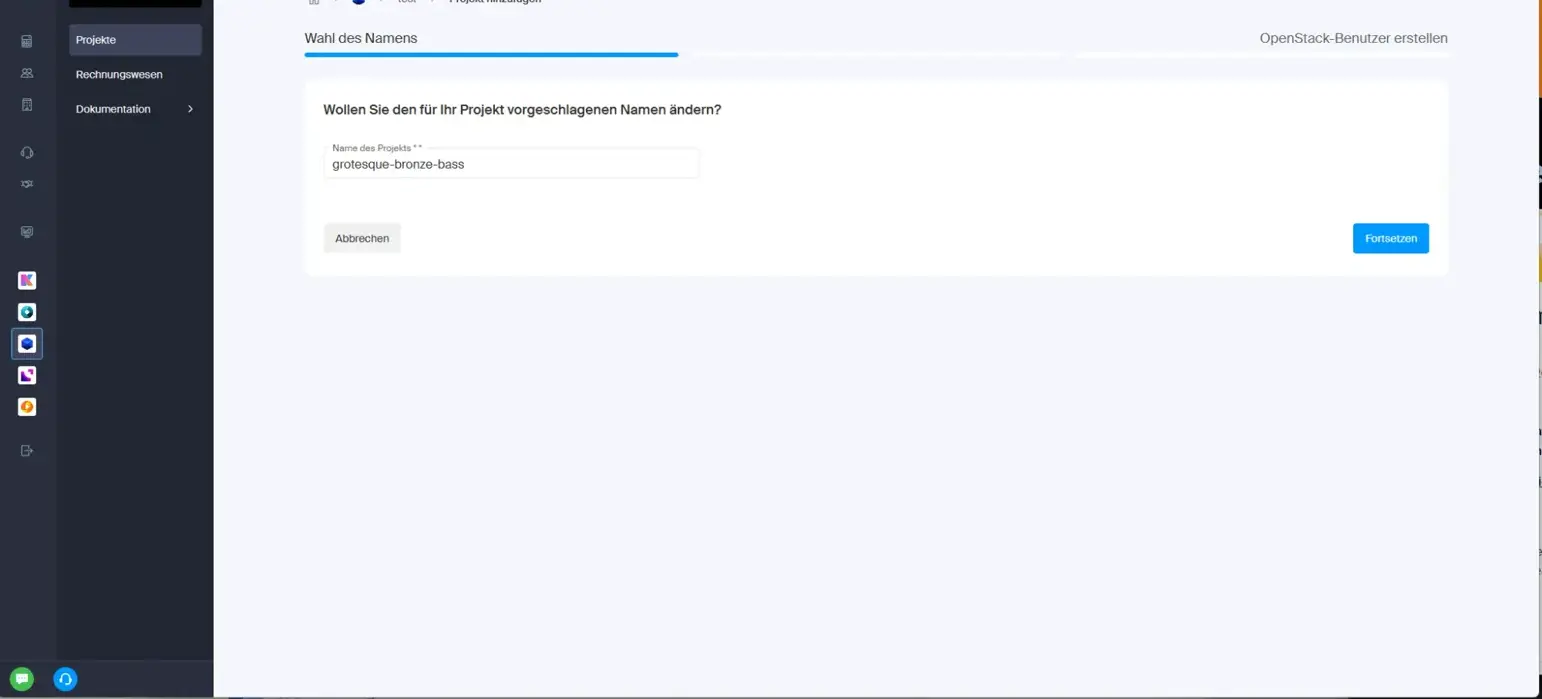
1. Create a Public Cloud Project
First, you need a Public Cloud project in Infomaniak’s manager. They generate quirky project names like “grotesque-bronze-bass”.
2. Choose Your Cluster Tier
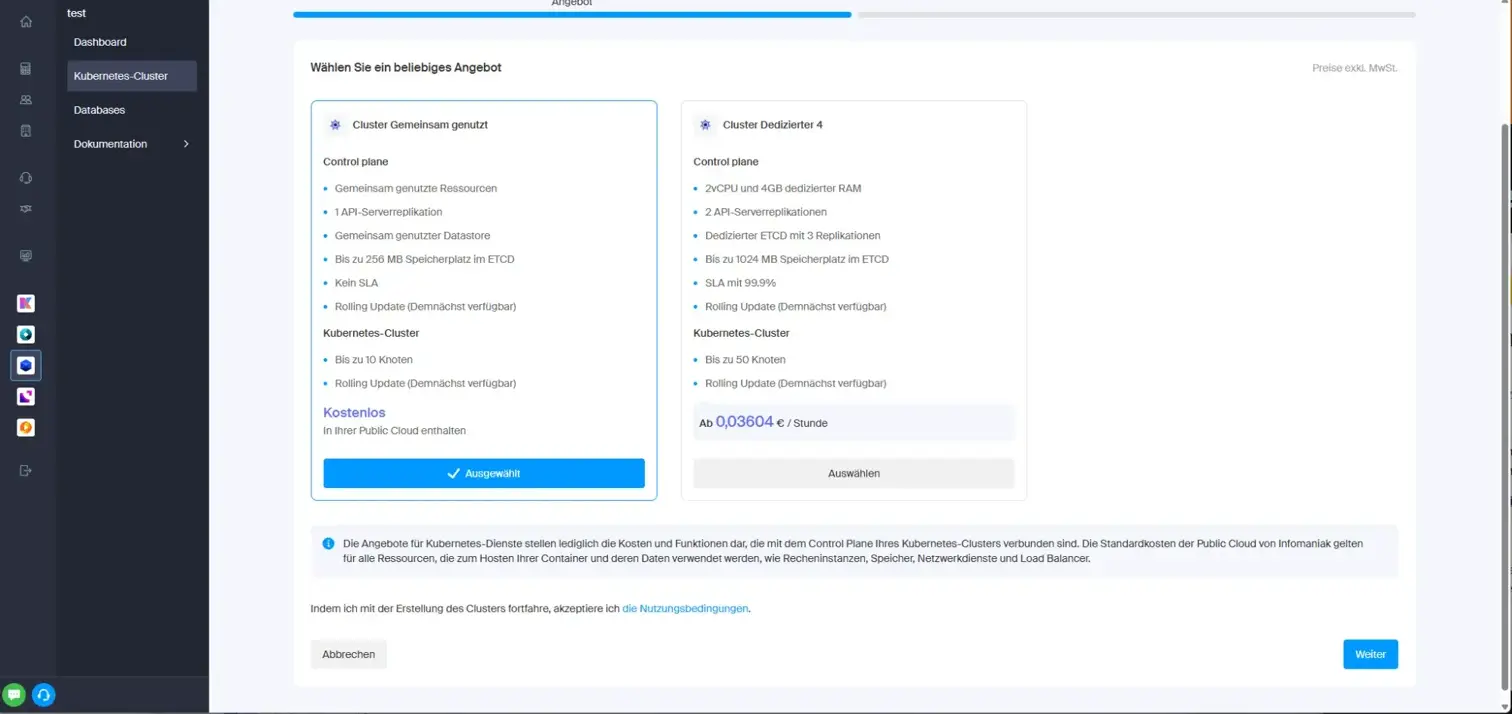
You pick between shared (free) and dedicated (€0.03604/hour). The dedicated tier gives you:
- 2 vCPU / 4 GB RAM for control plane
- 99.9% SLA
- Dedicated etcd with 3 replications
3. Configure the Cluster
Name your cluster, pick the region (only Data Center 4 in Switzerland), and select Kubernetes 1.34.
4. Add Instance Pool
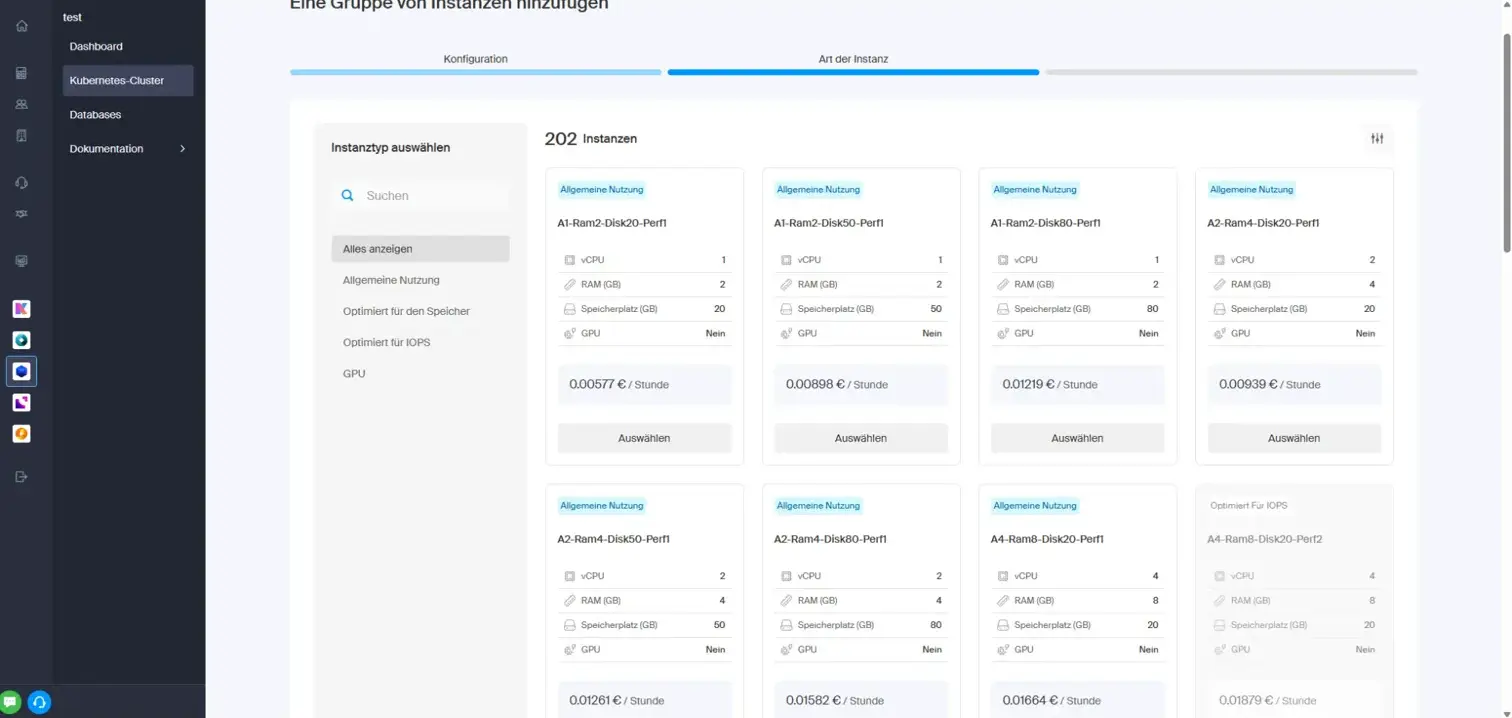
Select your instance type from 202 available flavors. The naming convention is straightforward: A4-RAM8-DISK80-PERF1 means 4 vCPU, 8 GB RAM, 80 GB disk, perf1 storage.
5. Wait (and Hope)
If you’re lucky, your nodes come up. If not, you’ll see this for a while:
OpenTofu Automation
I’ve published a complete OpenTofu setup on GitHub that:
- Provisions the cluster and node pool
- Extracts kubeconfig automatically
- Deploys ArgoCD for GitOps workflows
- Includes pre-commit hooks for linting and docs
Example terraform.tfvars:
infomaniak_token        = "your-api-token"
public_cloud_id         = 12345
public_cloud_project_id = 67890
region                  = "dc4-a"
cluster_name           = "my-cluster"
kubernetes_version     = "1.34"
pack_name              = "shared"
This gives you a repeatable deployment, which is nice for testing. Just don’t expect it to work reliably yet.
Who Is Infomaniak Kubernetes For?
Maybe suitable for:
- Swiss data residency requirements where you have no alternatives
- Hobby projects and experiments
- Development environments where stability doesn’t matter
- Cost-sensitive projects without performance needs
Definitely not for:
- Production workloads
- Database-heavy applications (500 IOPS won’t cut it)
- Compliance environments (ISO 27001, SOC 2, etc.)
- Hybrid cloud architectures
- Teams that need rolling updates now
Pros & Cons
Free control plane
The shared tier costs nothing, you only pay for worker nodes.
Swiss data sovereignty
100% Swiss-owned with strong privacy track record.
Green infrastructure
Everything runs on renewable energy.
Terraform provider
Official IaC support that actually works.
Extremely slow storage
500-1000 IOPS is 48-90x slower than competitors.
Unreliable provisioning
Nodes sometimes fail to come up without clear errors.
No network security
No API whitelisting, VPC isolation, or VPN options.
Limited flexibility
Single K8s version, only MySQL, rolling updates missing.
Verdict
Infomaniak’s Kubernetes offering feels like OpenStack with a managed K8s layer on top, rather than a purpose-built managed Kubernetes platform like EKS, AKS, or GKE. You can probably achieve more with the underlying OpenStack APIs, but at that point - why pay for “managed” Kubernetes?
The Swiss hosting, GDPR compliance, and free control plane are nice, but they don’t compensate for:
- Unreliable node provisioning
- Severely limited storage performance
- Missing security features for the API endpoint
- Rolling updates still coming
Have you tried Infomaniak Kubernetes? I’d love to hear your experience. Find me on GitHub or check out more provider comparisons at EU Cloud Cost.
Pricing data: January 2026. Compare current Infomaniak pricing | Exoscale vs Infomaniak | All provider comparisons
Find the Best Kubernetes Pricing
Configure your exact cluster requirements and compare real-time prices across 25+ European providers.
Open Calculator